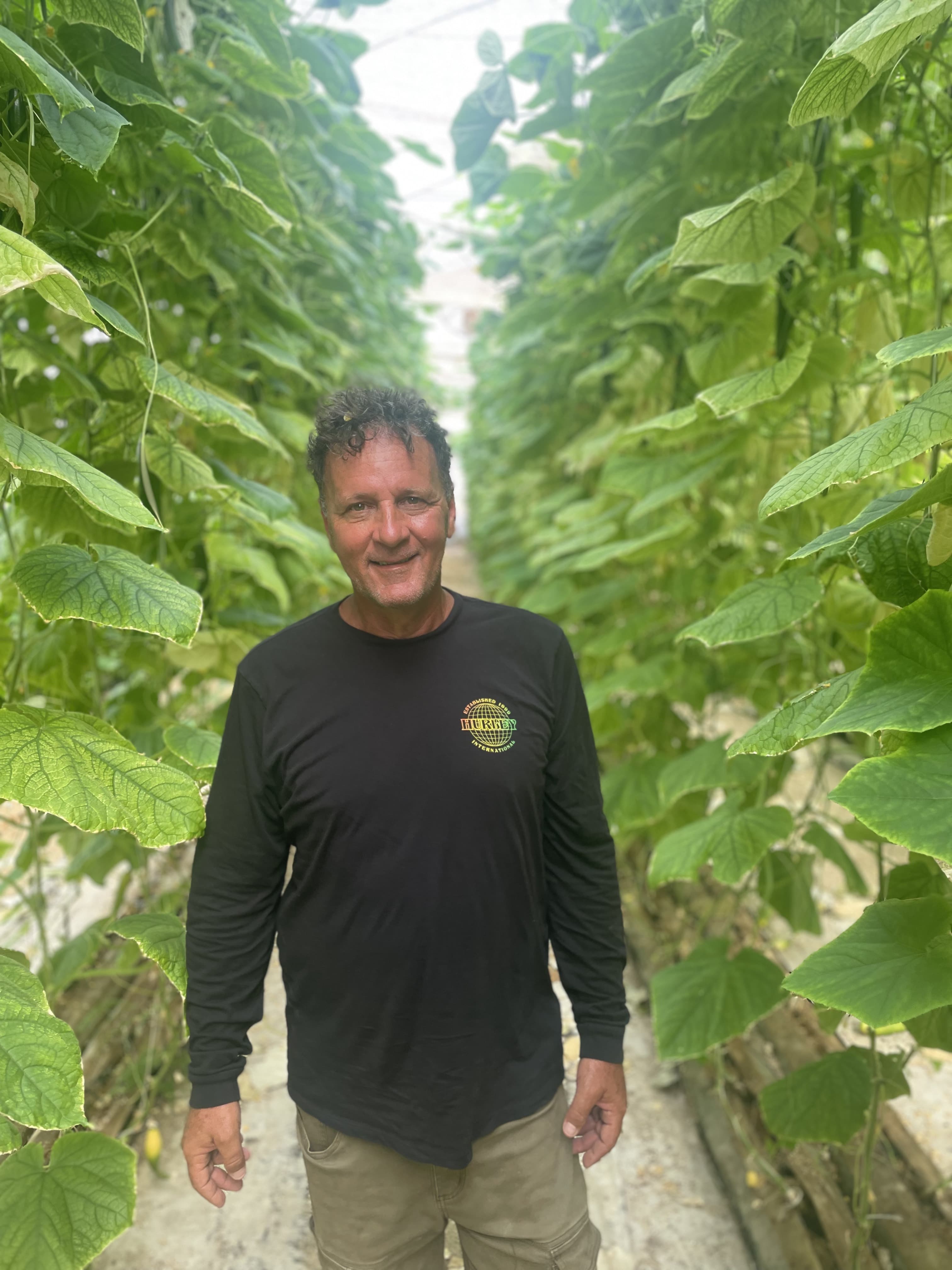
Nos Storia
Mi a cuminsa prome cu tempo.
I started ahead of my time.
Ari Lichtenstein, founder · since 2009
The Beginning
Plants were always the answer.
In 2009, Ari Lichtenstein looked at Aruba and saw a problem nobody else was solving. An island that imports almost everything. Tomatoes flown in from Venezuela of unknown origin. Cucumbers shipped from the US, picked too green and arriving too soft.
He bought 50.000 square meters of land near the entrance of Parque Nacional Arikok. He flew to Israel to study greenhouses, because their climate matched Aruba's. He built twelve greenhouses, by hand, with his own capital. No team. No subsidy. Just conviction.
Then came the obstacles nobody talks about. Water permits denied. Energy costs that crush small farms. Bureaucracy that turns months into years. After 13 years of pushing, the cunuku almost broke him.
“I almost gave up.”
Three years where Ari stopped believing it was possible.
The Pause
When the math stopped working.
By 2019, the costs had become impossible. Materials kept rising. The water bill alone could sink a small operation. Doing the work alone, dawn to dusk, while still not earning enough to pay help. Something had to give.
For three years, the cunuku slowed. Some greenhouses sat empty. The tomato vines did not get pruned. Ari kept the lights on, but barely. He stopped talking about expansion. He started questioning whether it was time to stop.
“It is impossible to do this work with one person. But the business does not yet rent enough to pay anyone.”
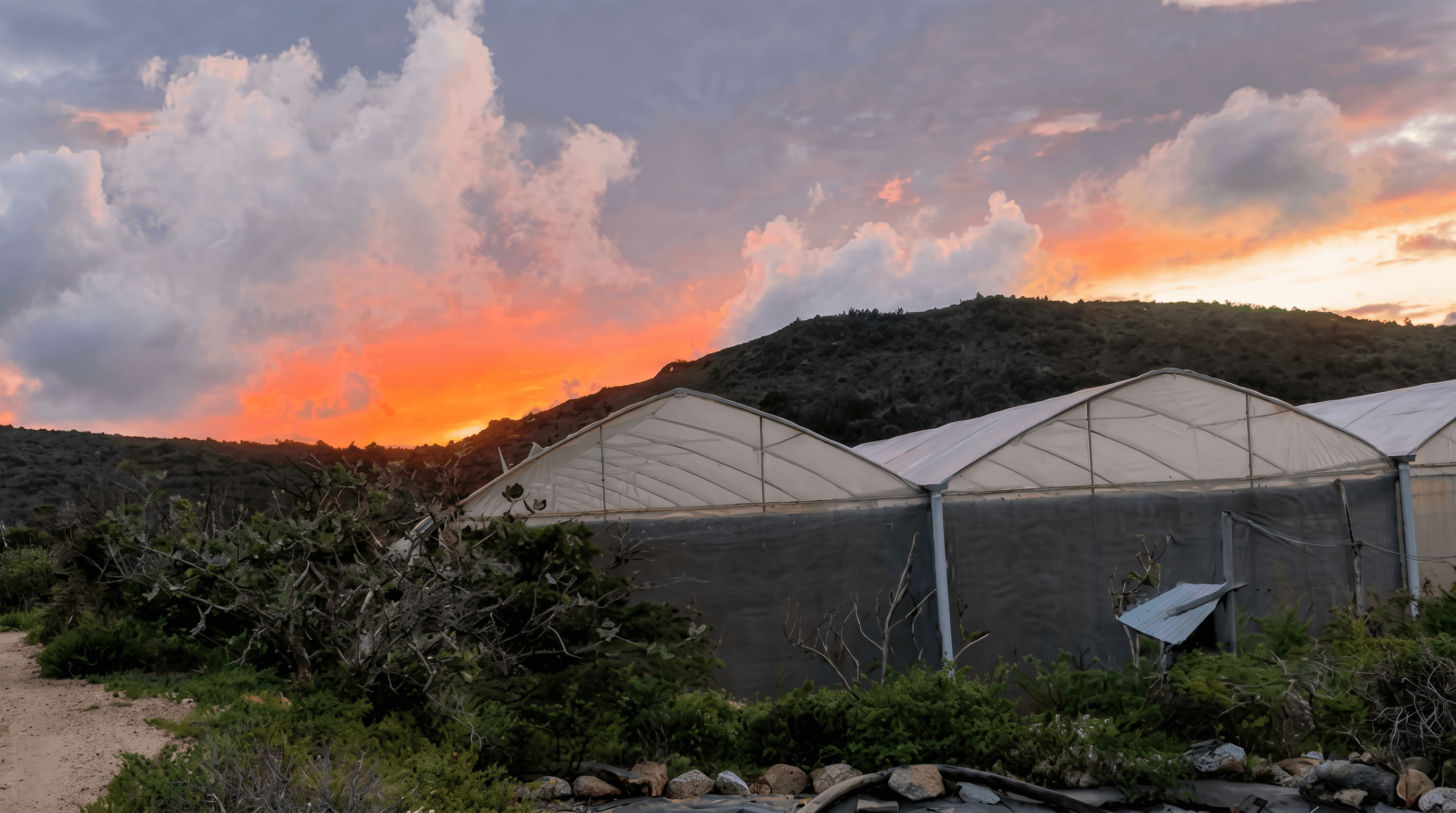
The cunuku, holding on.
The Return
2022. A second chance.
In 2022, Ari joined the Comision Pro Cunukero, a collective of Aruba farmers fighting for food security and policy change. Something shifted. He was no longer alone. The energy of the group brought him back.
He started rebuilding the greenhouses, one at a time. Tomato plants went in again. Then corn. Then cucumber. The harvest came back. Slowly, then suddenly. The cunuku stood up.
Today he brings Mercado Cunukero to Centro di Bario Noord every Saturday. The last market sold out his entire tomato harvest by 10:30 in the morning. People are hungry for real local food. Ari is back to give it to them.
“Mi ta sigui poco poco. Step by step.”
The Real Obstacles
Built against the system.
Ari wanted to solve his water problem himself. He bought large pipes from Valero when they left, planning to desalinate seawater with his own osmosis system. The government utility WEB holds a monopoly. The permit was denied. The pipes still sit on his land.
He grows without chemicals. Without subsidies. Without the structural support that farmers receive in the Netherlands, where food security has been a national priority since the pandemic. The Dutch government has funds available for Caribbean food security. Whether they reach small cunukeros like Ari depends on decisions yet to be made by the Aruban government.
Every obstacle was a teacher. Every season that almost failed taught the next one to stand stronger. The cunuku you see today is built from those lessons, those refusals, those workarounds.
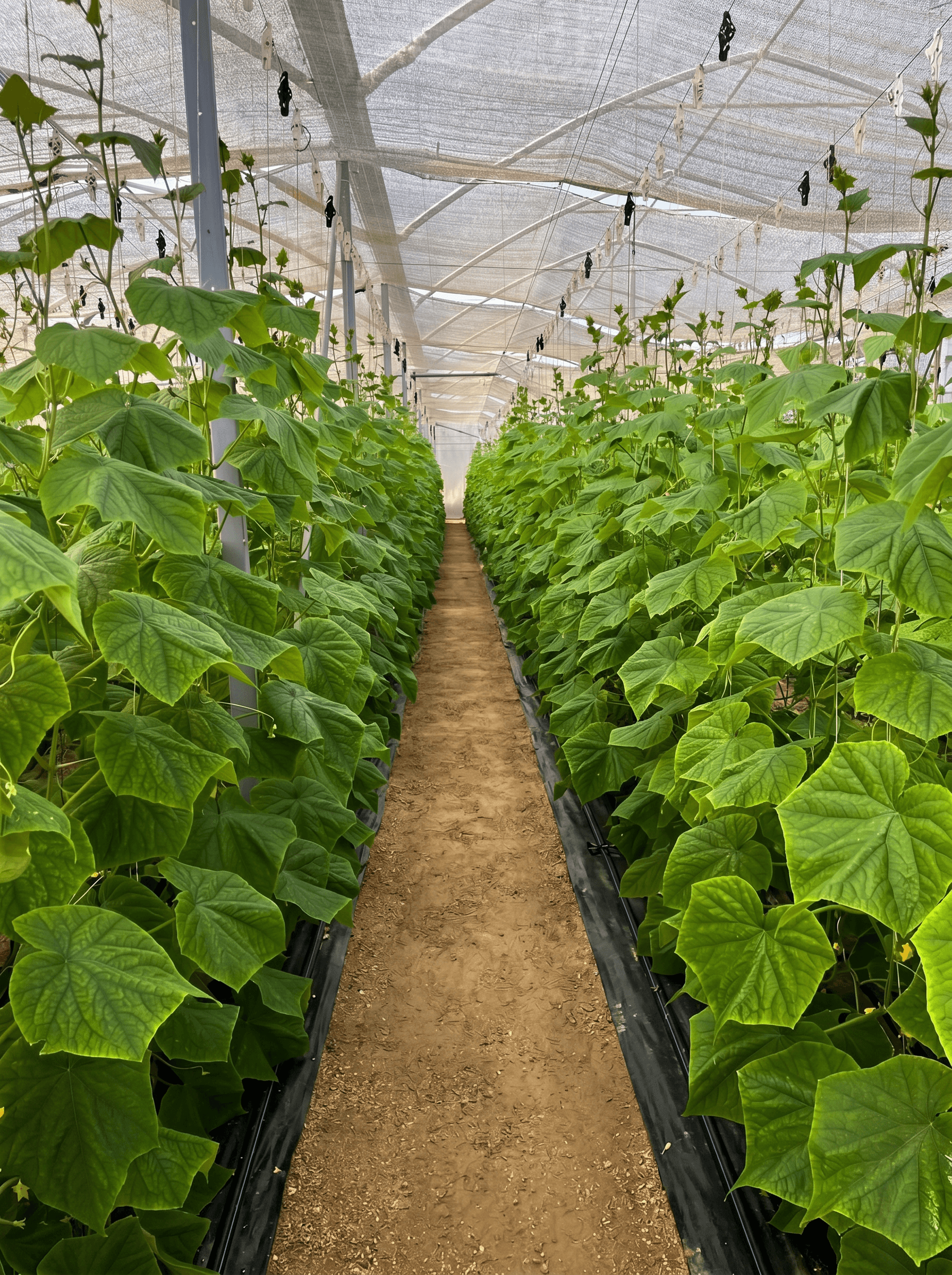
Inside the cunuku, where every row tells a season's story.
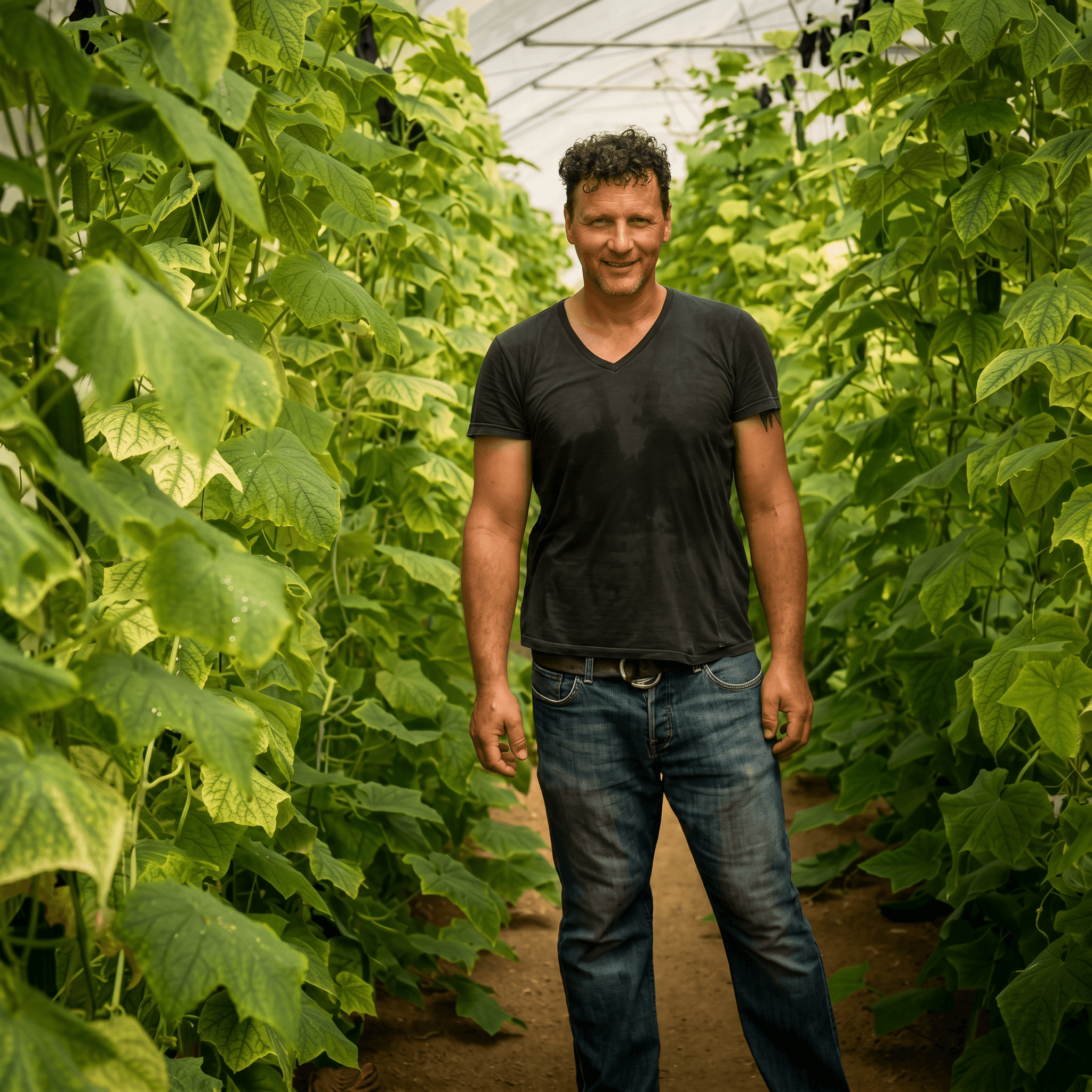
About Ari
Born and raised. Plants in the blood. Hands that have shaped soil for nearly two decades.
“He does not call himself a businessman. He calls himself a farmer. There is a difference.”
Every morning before sunrise. Every plant checked by hand. Every harvest packed by people he knows by name.
What They Say
Recognized for the work.
“Ari is demonstrating that Aruba can do this. He is a voice and the heard ear of the farming people, showing that we can develop more in agriculture.”
Jair Britten · President, Comision Pro Cunukero
“Last Saturday at Playa Pabou, there was no place to park. By 10:30 in the morning, Ari had sold every tomato. Customers were grabbing the other vegetables faster than they could be restocked. Local fresh produce without pesticides is highly appreciated and necessary.”
Bon Dia Aruba · May 2026, at the market's previous location
The Mission
Food security is national security.
The pandemic exposed it. The war exposed it. The supply chains exposed it. An island that imports almost everything is an island that is vulnerable. Local production is not a hobby. It is the foundation of an independent Aruba. One cunuku at a time, one harvest at a time, one market at a time, we are building toward that future.